
Ugh, Author Scams!
Tips on identifying fakes, plus some language that raises red flags

In recent months, I’ve received a deluge of scammy emails targeting me as an author. I’ve also had my press identity stolen and used to bait unsuspecting authors.
The scammers are using hope to trick authors into engaging. Of course we all want our work to be discovered by someone who believes in it! But if it’s too good to be true, it’s probably false. These emails are no different than the people claiming I need a (nonexistent) compliance key on my website, or the “bills” that urge recipients to click on phishing links.
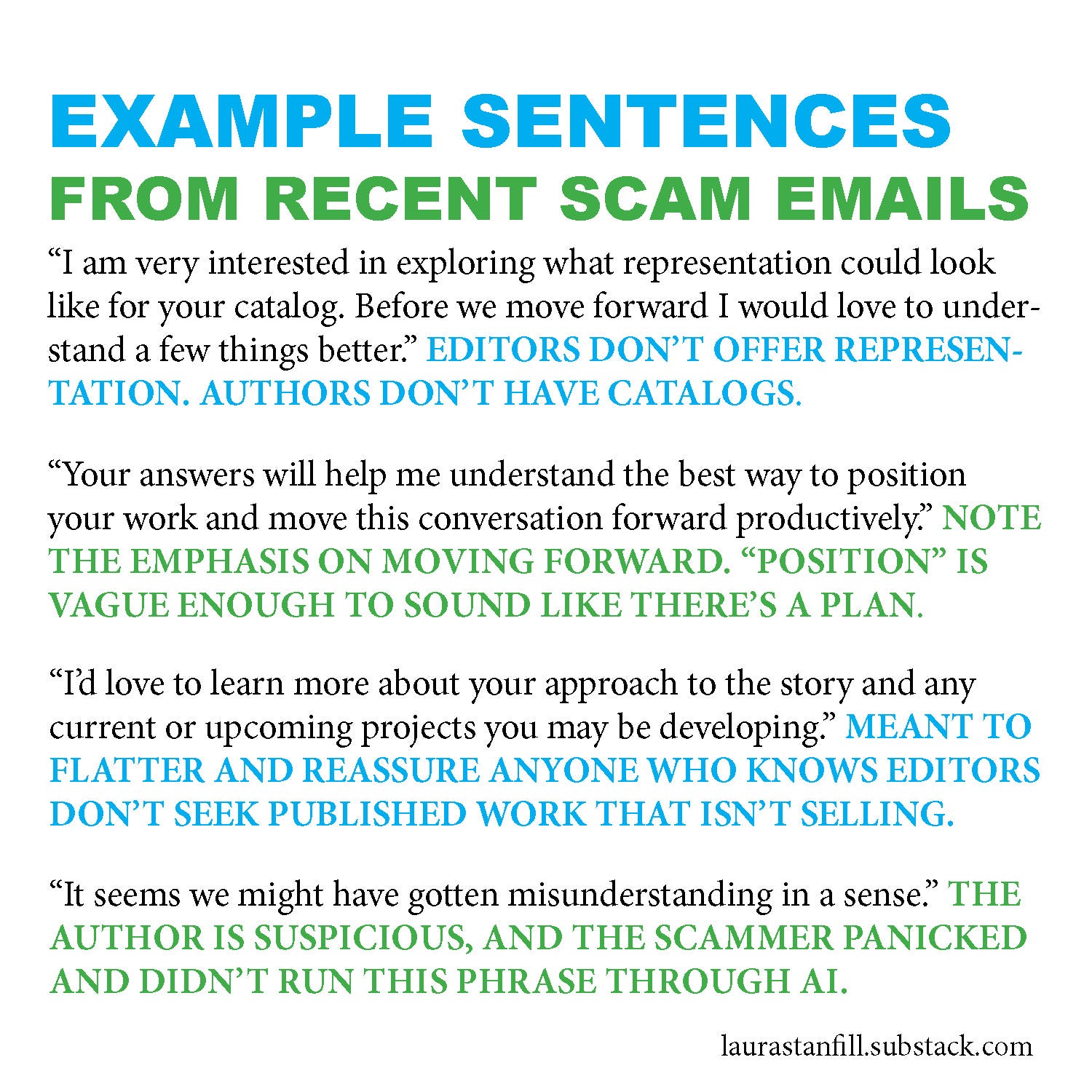
Writers started reaching out to me and one of my editors this spring, asking if we really want to work with them. The people I heard from all had self-published work on Amazon, which if you know me, isn’t where I’d be looking for new projects. None of the projects had anything to do with what I publish. The “editor” who had reached out to these authors clearly identified themself as an acquiring editor for Forest Avenue and included a real photograph of the real person. Creepy.
The person claiming to love your already published book probably has a solid reputation in the industry, or their identity wouldn’t have been stolen. This is good news: you can look up the real person.
Tip 1: Read some interviews with the actual person to get a sense of how they sound. The flat AI-driven voice of these scam emails will sound different and this can help you quickly get clarity.
Some of the targeted authors got into conversations with the fake “editor” before reaching out to me directly. I worry that for every person who reached out to ask, others believed Forest Avenue really wanted to introduce them to an agent, who would then “sell” the book to our press. I worry even more that authors have been scammed out of money because they think someone from my company cares about them.
Tip 2: In publishing, money should always flow from the press to the author, unless you’re working with a hybrid press or an author service (publicity, editing, etc.). The first scam emails try to develop trust before the financial ask is delivered.
We’ve worked so hard to build something special, to be trustworthy for our readers and to centralize open communication with our authors. Milking authors by building them up and then asking them to pay is the opposite of everything we stand for. I can’t tell you how discouraging this is.
Tip 3: Read between the lines. What is the person asking? Is it concrete or general? The less specific, the more likely they’re playing you for information, which they’ll use to exploit you. (Remember, this is all a lead-up to a request for payment.)
These scams run on AI-generated compliments for books already in print, and they can be very flattering. We are all starved for readers actually spending time with our work—especially after the launch buzz dies down. That’s how and why this scam gets people. They (we) feel seen. Which says so much about our literary culture right now. How hard it is to find readers after we work so hard on creating work that is meaningful, especially as book sections at newspapers continue to shutter.
Even when authors post to warn others about receiving scam emails, they often share the lush compliments they’ve received—like, isn’t it great that the scammer really understands what I was trying to do? I get that impulse. It’s hard to receive praise and delete it immediately, as the writers, are hoping for heartfelt reactions exactly like the computer-generated ones. That’s how these people are getting authors to believe in them and eventually buy in financially to whatever “services” they offer. Making authors feel seen.
Tip 4: Ignore the praise—don’t even read it—and look at what other clues are in the email. Can you spot the ask? If not, if it’s unclear, it’s probably spam. A real person would come right out and explain their request.
Just this week, I received a phishing email claiming to be from a major editor at a large independent press. I love this press. But I knew right away: this editor isn’t taking time to reach out to me about a book published by another, still-in-existence press in 2022. That editor’s best-known projects have nothing to do with what I write. I sent the email to the publishing house, so they can try to shut it down.
Here are some other insights gleaned from this barrage of fakery:
It’s unlikely an editor or publisher will reach out to you about an already-published book. Especially if your book is in a different genre than what the “editor” usually acquires.
Lately, all the scam emails have come from gmail, with “.editor” or “.agent” as part of the gmail address. I suspect at least some of them are the same person, or group of people, creating false accounts.
Not all gmail accounts are fake! Bigger presses with IT departments are not using gmail, likely, but some of us small presses do. The .editor or .agent marker may help you sort out the fake ones. Although, again, some legit places probably use that kind of marking.
For all the authors that think they heard from Forest Ave and have asked us, not one has a book that fits with what we actually publish. Our submissions language and our actual catalog should confirm this at a glance.
If you get into talks with an “editor” they might try to pass you to another person, who is probably just the same person with a different email address. The language I’ve seen is some version of this: “Are you currently represented by a literary agent? If you are, I’d be happy to continue the conversation through them. If not, I can certainly outline how that process typically works and explore whether there may be a good fit for your work within our publishing program.”
I’ve noticed that the scammers either use exact names of real people with slightly altered business titles, or they use names that are slightly different from real people in the industry.
Even if the first email is polished, later ones tend to have grammatical mistakes that point to them coming from people who are not working professionally in publishing. I’m not talking about typos; I’m talking about facility with language, run-ons, and missing punctuation.
The most recent phishing email I received had less flowery language than previous ones. The scammers might be learning to tone it down a bit in order to sound more realistic.
I haven’t heard from anyone who actually paid—yet—so I’m not sure when or how the conversation shifts into asking for money, but people don't steal other people’s identities without a reason.
One of the authors who talked to me told the scammers that they had been in touch with the real Forest Avenue Press, and instead of disappearing, the scammers argued! First they tried to claim confusion and repeated our editor’s real website address, like it was theirs. Then they tried claiming that THEY had put out a scam warning, “after becoming aware of a small number of complaints and misunderstandings regarding outreach that had been imitated or misrepresented by third parties.” Finally they gave away the game: “If you feel you no longer trust me this will be my last message to you however if you still want to proceed and explore my services.” AH HA! Services had never been mentioned until then.
Be aware. Protect yourself. Share these tips and any others with your writer friends. I think it’s going to get even harder to tell real outreach from fake. The Authors Guild keeps a scam reporting resource that is useful, so keep tabs on that. https://authorsguild.org/resource/publishing-scam-alerts/#publisher-impersonators
There’s not much to do, besides deleting and reporting to whoever the scammer is pretending to be.
Although this deluge of fake praise maybe can remind us all to tell authors when we love their books. Real praise means so much more than computer-generated puffery.
Show up for each other. Read each other. Keep making new work.
Spring 2026 News
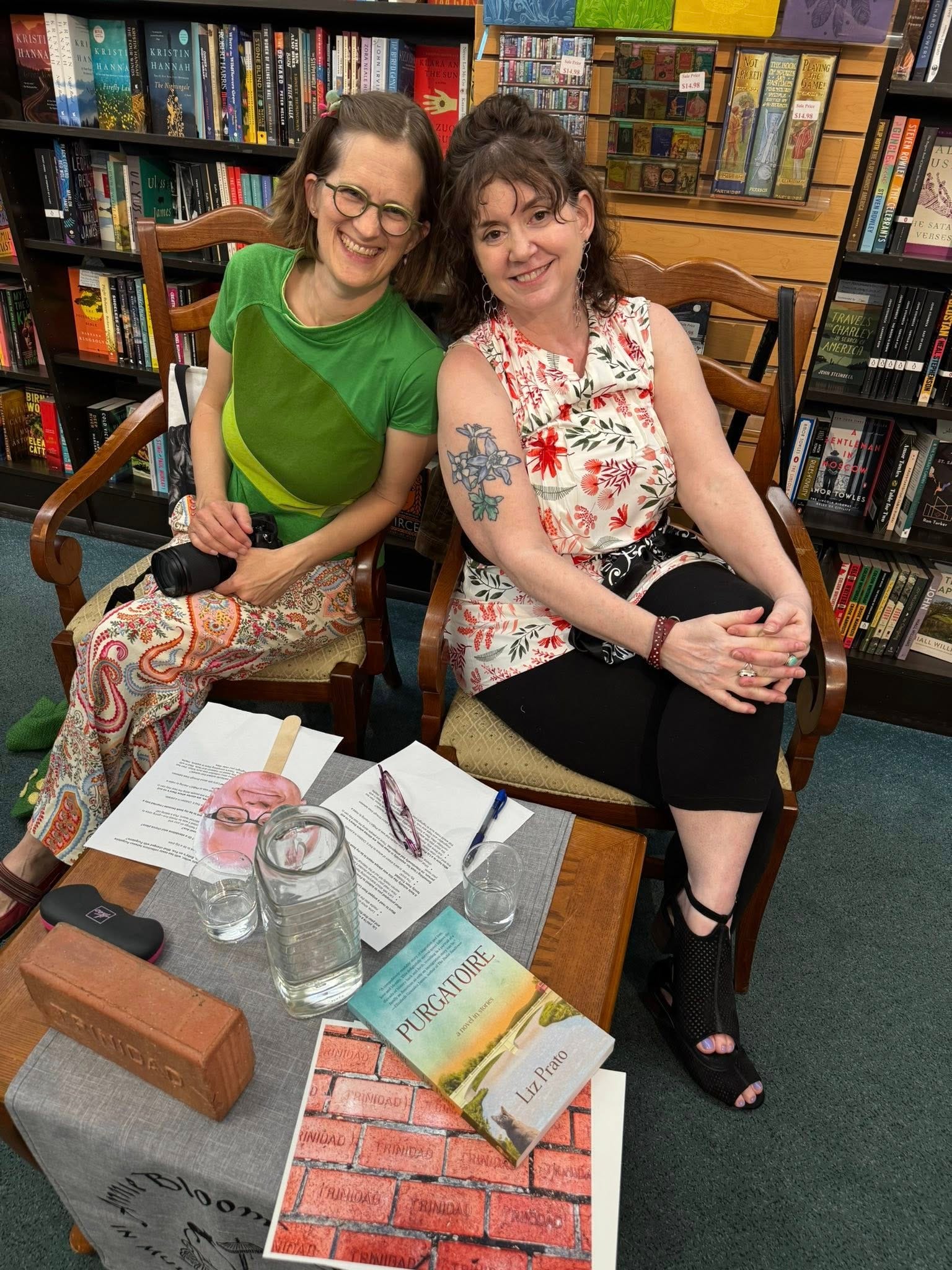
Liz Prato’s Purgatoire is now out from Forest Avenue, and it’s earned a starred review from Library Journal and the distinction of being named the 2026 Powell’s Pick for Portland! Earlier this week, she and I appeared in conversation at Annie Bloom’s. Liz is headed to Colorado next. She'll be at the Trinidad History Museum at 5:30 p.m. on May 13 and the Denver Barnes and Noble with Wendy J. Fox at noon on May 16.
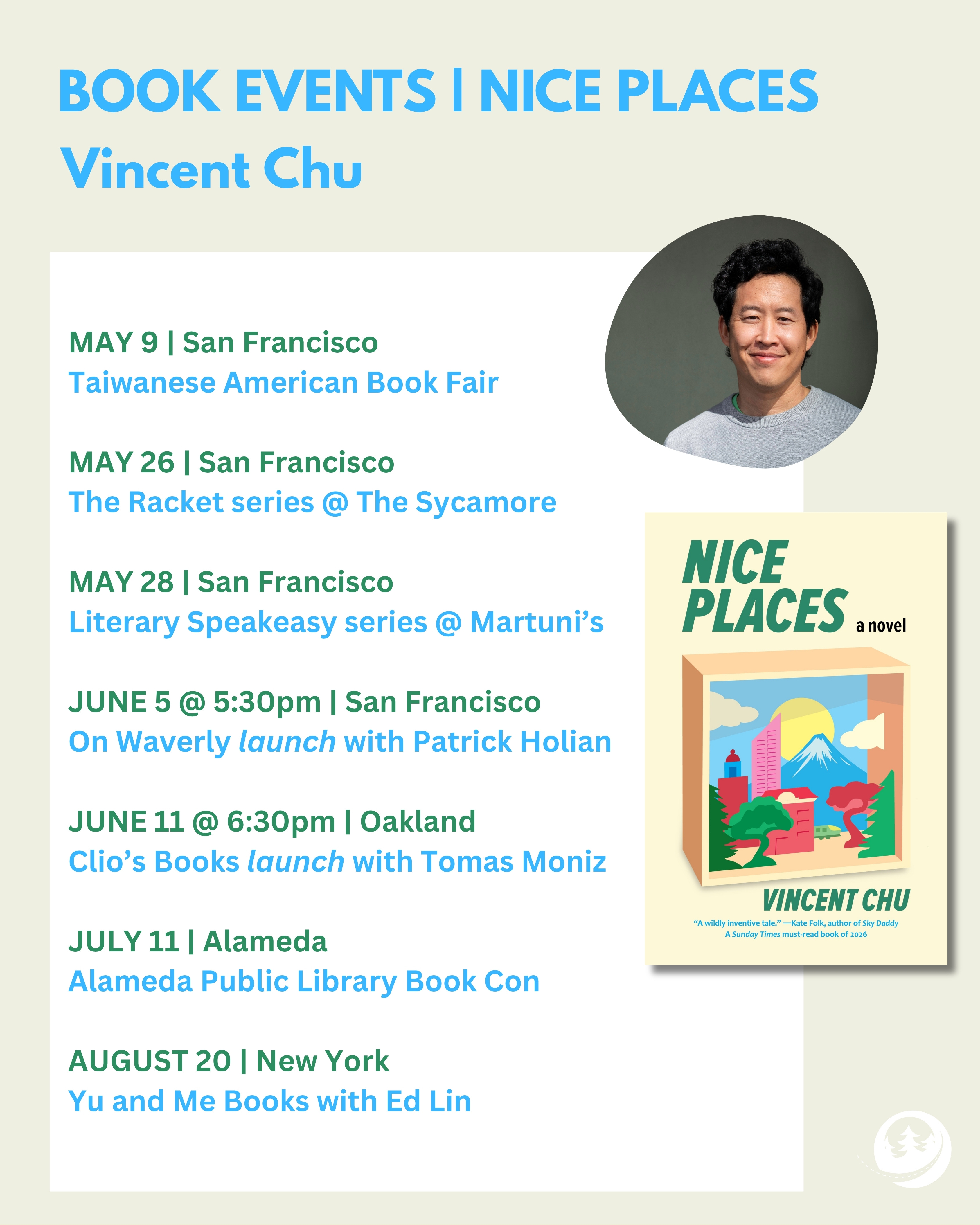
Vincent Chu’s Nice Places is forthcoming June 2, and you can see him at these venues. Let me know if you can attend, and/or if you take photos!
If you are a bookseller or reviewer and you want an ARC of The Sea-Glass Shore, the debut novel by Julie Salmon Kelleher, reply to this email! It’s on Edelweiss but I have a number of print ARCs to share as well.
The audiobook edition of Trust Me, Scott Nadelson’s brilliant Oregon-set novel, is 60 percent off right now.
Ooligan Press released a trailer for my new novel, The Neighborhood Dames, due out Nov. 10!
Speaking of The Neighborhood Dames, if you’re a bookseller or reviewer on Edelweiss, you can request a PDF copy from Ooligan!
*
Have you been targeted by author scams? Any tips for other authors? Feel free to respond in the comments or to email me directly. I love hearing from you. And I hate that we’re being preyed on collectively.
Oh so many of these and so flattering for books that have been out-of-print for a few years. Your tips are so helpful to new writers who may not know what's real (none of these offers) and what's slop. I have to admit though, I do read the flattery. Sometimes, fake as it is, it still gives me a grin. Thanks for this one, Laura.
thank you for these very helpful tips, laura. i am having to swat back these emails and FB messages every day. it's sickening..and you're so right that it plays to what we as writers all want. grrrrr